
Long before it became a hub for Red Mesa's roots rock, Room 9’s name had humble, almost accidental beginnings. It started as a simple motel room number, carved into a scratched-up key found at the old Red Mesa Inn. The key’s tag, marked 'Room 9,' was passed around by musicians and locals, each adding their own stories to its history. Over time, the space transformed from a forgotten motel corner into a legendary recording studio. The name stuck, imbued with nostalgia and grit.
The real twist lies in the neon sign that was supposed to light up above the studio’s entrance. An ambitious electrician, hired in the early ‘70s, promised a glowing ‘O’ in the word ‘Room’—a nod to the neon craze sweeping through town. But fate had other plans. The neon tube was faulty from the start, flickering weakly then dying altogether after a few weeks. Despite multiple repairs, the sign remained stubbornly dark, becoming an ironic emblem of the studio’s spirit—a symbol of resilience rather than glamour.
Legend has it that the neon ‘O’ became a local symbol of patience and perseverance. Musicians would joke that the sign’s failure kept the studio grounded. The ‘O’ never lit, yet it became a point of pride. Every band that recorded there, from the early country twang of the Marigold Sisters to the gritty blues of Otis Crane, understood the charm in its stubborn darkness. It was a reminder that sometimes, the simplest stories leave the deepest mark.
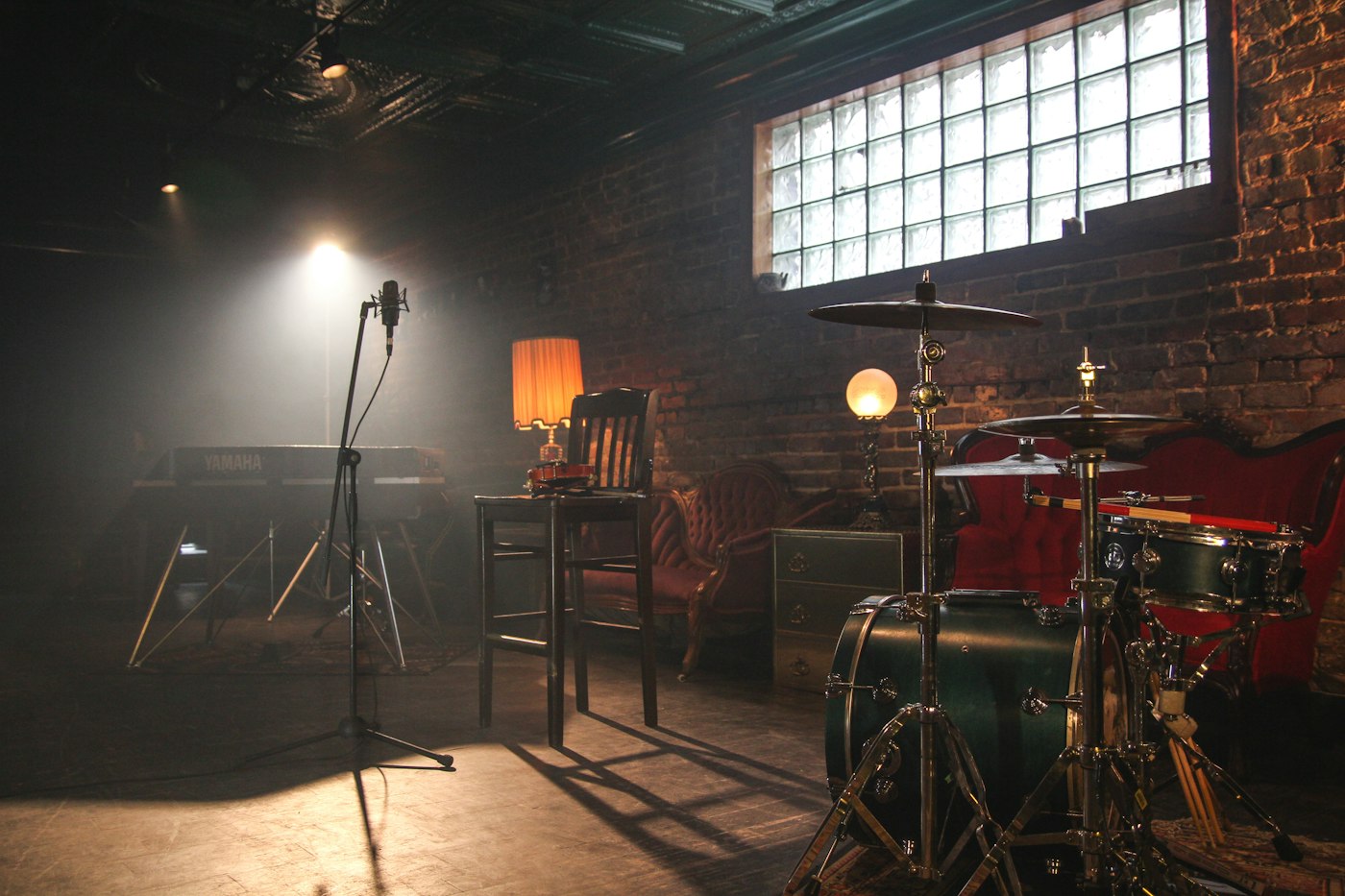
Over the years, Room 9 grew in reputation, hosting countless legendary sessions that shaped Red Mesa’s sound. The space was more than just a studio; it was a gathering point for artists who believed in the rough-and-tumble, real-deal country ethos. The neon sign, dark and unlit, served as a beacon in its own right—an icon of the unpolished, authentic spirit that defines the town’s music scene. Its story became woven into local lore, told and retold at every honky-tonk and radio station.
The story of the unlit ‘O’ also reflects the broader history of Red Mesa’s underground music scene—full of grit, resilience, and a touch of humor. It’s a tale that underscores how sometimes the most memorable symbols are born from imperfections. The sign’s darkness invites musicians and fans alike to focus on the music, not the flash. It reminds everyone that authenticity beats aesthetics every time—an essential lesson from a town that’s seen more than its fair share of hard knocks.
Today, Room 9 remains a cornerstone of Red Mesa’s musical identity. The neon sign, despite its lack of illumination, continues to draw curiosity and respect. Musicians still gather there, trading stories about the old motel key and the stubborn neon that refused to shine. The story’s been passed down through generations, cementing Room 9’s place in the town’s collective memory. It’s a testament to the enduring power of simplicity, perseverance, and a good story that refuses to fade, even in darkness.
– – – – – – – –
Know something we should know? Leave a tip on our subscribe page and help keep Red Mesa’s country scene alive and loud. Leave a tip.
© 2026 Alistair Christl
4 Comments
Patty L.
Neon sign that never lit? That’s a story I’d love to hear at the next town gathering.
Derek W.
Room 9’s history is fascinating. I always thought the sign was just a legend.
Karen S.
Maybe the sign’s a symbol of what could’ve been—a missed opportunity.
Alistair Christl
The legend of Room 9 is part of Red Mesa’s charm—mystery and nostalgia combined.
Leave a Reply
Your email address will not be published. Required fields are marked *